
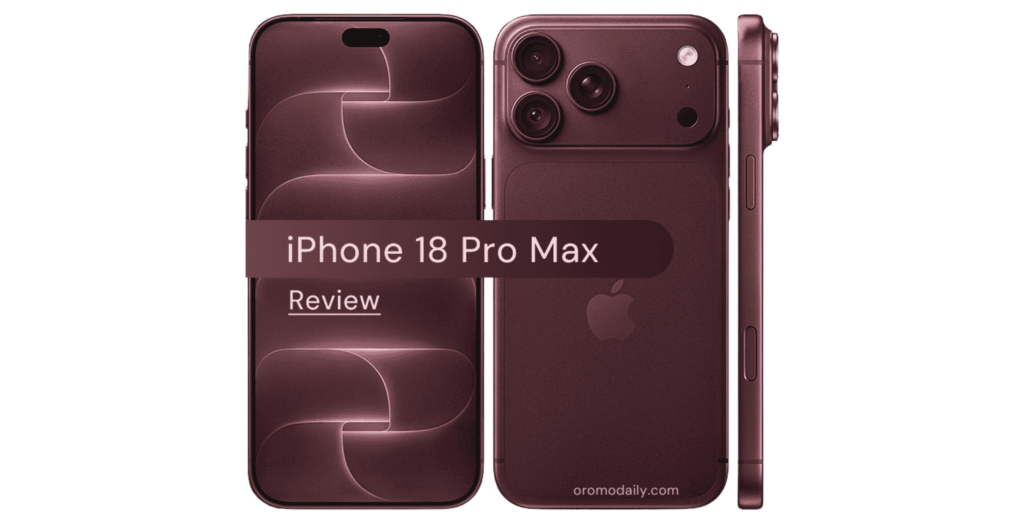
Every year, Apple releases a new Pro Max. Every year, the upgrades are incremental. And every year, someone asks: is this one actually worth it? The iPhone 18 Pro Max, released September 18, 2026, is the rare exception where the answer is clearly yes — not because of a longer spec sheet, but because of one genuinely historic camera breakthrough that changes what a smartphone can do photographically. Combined with the A20 Pro chip, an enormous battery step up, IP68 rated to 6 meters, and iOS 27, this is the most capable iPhone Apple has ever shipped.
Design & Build
At 163.4 x 78 x 8.8mm and 249g, the iPhone 18 Pro Max is a large, premium device. The slightly increased thickness over its predecessor accommodates the significantly larger battery — a trade-off most users will happily accept. The build uses Ceramic Shield 2 on the front and an aluminum frame and back, with an anti-reflective coating that makes the screen dramatically easier to read at angles.
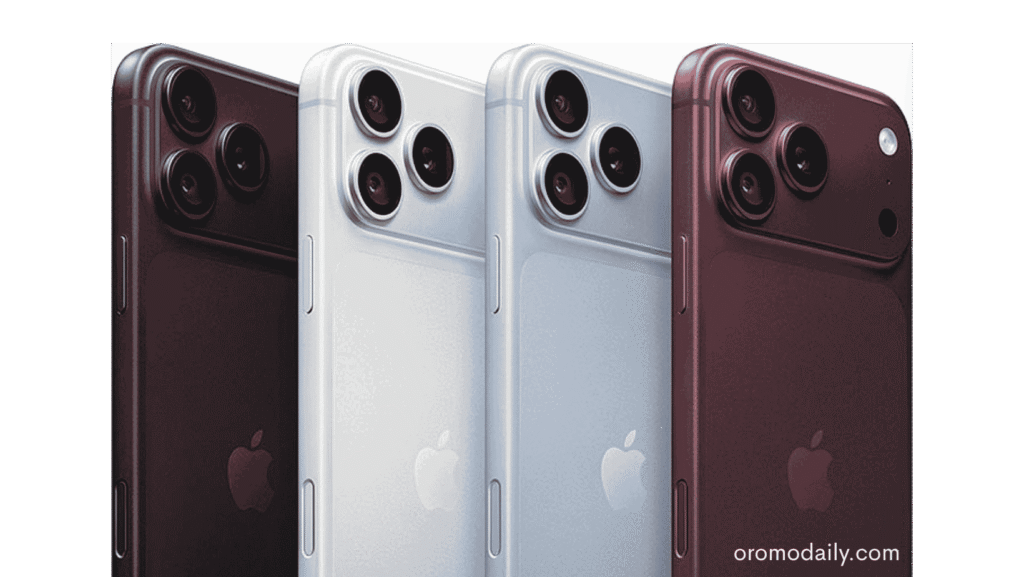
The IP68 rating on the 18 Pro Max is notably upgraded — rated to 6 meters of water resistance for 30 minutes, compared to the standard 1.5 meters on most competitors. This is the most water-resistant non-rugged flagship phone available. Color options — Black, Silver, Glacier, and Burgundy — are refined and understated, as Apple’s Pro lineup always tends to be.
Display
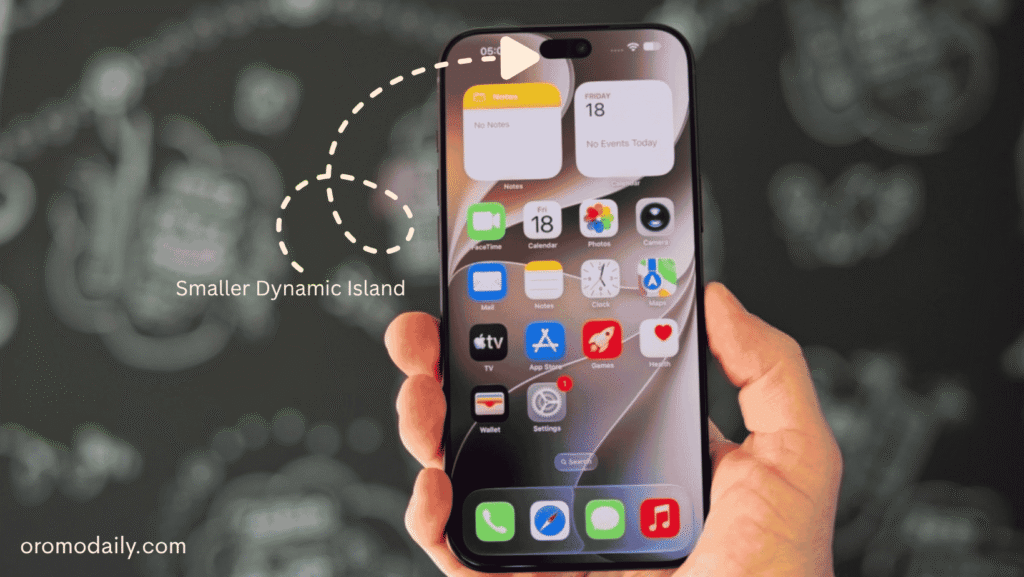
The 6.9-inch LTPO Super Retina XDR OLED display is exceptional. At 460 ppi with adaptive 1–120Hz ProMotion, 3,000 nits peak brightness, Dolby Vision, and HDR10, it represents the best screen Apple has ever shipped — and one of the finest displays on any smartphone today. The anti-reflective coating paired with 3,000 nits makes outdoor visibility in any lighting condition a non-issue.
The Always-On Display, ProMotion adaptive refresh, and Apple’s display calibration give it a visual quality that feels effortless — colors are accurate without being oversaturated, and text is razor sharp at any size. It is not the absolute brightest display on the market — the Xiaomi 17 reaches 3,500 nits — but Apple’s display tuning and color accuracy remain best in class.
Performance - Apple A20 Pro on 2nm
The Apple A20 Pro, built on a 2nm process, is the most powerful mobile chip available — and it is not particularly close. Apple’s chip advantage over Qualcomm and Samsung has widened with this generation. The hexa-core CPU with two performance cores at 4.93GHz and four efficiency cores at 2.64GHz delivers single-core performance that no Android chip matches, and the 7-core GPU handles even the most demanding mobile workloads without thermal throttling.
12GB of RAM is standard across all storage variants — 256GB, 512GB, 1TB, and 2TB. The NVMe storage is the fastest available on any smartphone. In real-world use, everything is instant. Apps open before your finger lifts. ProRes video editing happens in real time. Heavy gaming sessions remain smooth and cool. This chip will not be a bottleneck for years.

Camera — The Physical Aperture That Changes Everything
This is the headline feature of the iPhone 18 Pro Max, and it deserves a proper explanation — because what Apple has done here is not just another megapixel bump. It is a fundamental shift in how a smartphone camera works.
What Is Physical Variable Aperture?
Every smartphone camera before this one — including every previous iPhone — has used a fixed aperture. Fixed aperture means the lens opening never changes. In bright daylight, software compensates by reducing exposure time. In low light, software compensates by pushing ISO higher. The physical lens itself never moves.
A physical variable aperture, as highlighted by MKBHD and confirmed across multiple sources ahead of launch, works the way a professional DSLR or mirrorless camera lens works. The lens diaphragm mechanically opens and closes to control how much light hits the sensor. This gives you real optical control — not computational — over three things that define a great photograph: depth of field, background blur, and low-light exposure.
In bright sunlight, the aperture closes down to prevent overexposure and keep the entire scene sharp. At night, it opens wide to flood the sensor with light naturally — rather than relying on software noise reduction after the fact. For portraits, you can control the amount of background blur optically rather than computationally. The results are images that look more like they came from a dedicated camera than a phone — because in a meaningful sense, they did.
The main 48MP wide camera operates across an f/1.5 to f/4.0 aperture range on a large 1/1.28″ sensor with dual pixel PDAF and second-generation sensor-shift OIS. The f/1.5 maximum aperture is the widest Apple has ever used. Combined with physical aperture control, this is the most optically capable main camera ever fitted to an iPhone — and arguably to any smartphone.
The Rest of the Camera System
The 48MP periscope telephoto at f/2.8 with 4x optical zoom and 3D sensor-shift OIS delivers sharp, stable zoom shots. The 48MP ultrawide at 120 degrees with PDAF rounds out what is now an all-48MP triple camera system — every lens shooting at the same resolution. Video capabilities push to 4K at 120fps in 10-bit Dolby Vision HDR, ProRes RAW, and Apple Log 2 — making this one of the most capable video production tools available in any form factor. The 18MP selfie camera shoots 4K at 60fps with Face ID and ProRes RAW support.
Battery
The battery story on the iPhone 18 Pro Max is a significant improvement over previous generations. The 5,391mAh cell (5,567mAh on the eSIM-only model) is substantially larger than the iPhone 17 Pro Max, and the EU energy label rates it at 62 hours of endurance — Apple’s best ever. The A20 Pro’s 2nm efficiency plays a key role here; the chip does more while consuming less power than its predecessor.
Charging reaches 50% in just 15 minutes via wired PD3.2 charging — fast by Apple standards, though still behind the 100W wired speeds of Xiaomi and OnePlus flagships. MagSafe wireless charging at 25W is a meaningful step up and hits 50% in 30 minutes. Reverse wired charging at 4.5W allows the iPhone to charge accessories — a small but practical addition.
Software — iOS 27 and Apple Intelligence
iOS 27 is Apple’s most refined software release in years. The interface is clean, consistent, and exceptionally smooth on the A20 Pro hardware. Apple Intelligence features are deeply integrated — real-time writing assistance, image generation, smart photo search, and on-device AI processing that operates without sending data to a server.
Apple’s software support is unmatched in the industry. iPhones typically receive 6 to 7 years of iOS updates, and the A20 Pro chip will have no trouble running whatever software Apple ships for the foreseeable future. The ecosystem integration — seamless connection with Mac, iPad, Apple Watch, and AirPods — remains the strongest in consumer technology.
Price & Value
Starting at €1,599 internationally — approximately 300,000 to 350,000 ETB in the Ethiopian market — the iPhone 18 Pro Max is the most expensive phone we have reviewed on Oromo Daily. There is no softening that reality. This is a premium product at a premium price, and it makes no apology for it.
What you get for that price is the best chip available, the most advanced mobile camera system ever made, IP68 to 6 meters, 6+ years of software support, and an ecosystem that is unmatched. For professional photographers, videographers, and content creators who need the absolute best camera in their pocket, the iPhone 18 Pro Max justifies its price. For everyone else, the Samsung Galaxy S26 Ultra or Xiaomi 17 deliver 90% of the experience at a meaningfully lower cost.
Price & Value
The iPhone 18 Pro Max is the best smartphone Apple has ever made — and the physical variable aperture camera is the reason. For the first time, a smartphone camera behaves like a real optical instrument rather than a computer pretending to be one. The results speak for themselves: more natural depth of field, better low-light images, and a creative control that no previous iPhone has offered.
Add the A20 Pro chip, the 6-meter IP68 rating, 62 hours of battery endurance, 4K at 120fps in Dolby Vision, and iOS 27, and you have a phone that earns its 9.5 rating without debate. The price will remain a barrier for most — but if budget is not the primary concern, this is the phone to own in 2026.
Pros
- Physical variable aperture (f/1.5–f/4.0) — a first on any iPhone, a first at this level on any smartphone
- Apple A20 Pro (2nm) — fastest mobile chip available
- IP68 to 6 meters — most water-resistant flagship available
- 62 hours battery endurance — Apple’s best ever
- 4K at 120fps Dolby Vision + ProRes RAW video
- All-48MP triple camera system
- iOS 27 with 6+ years of updates
- Best-in-class ecosystem integration
- USB-C 3.2 Gen 2 with DisplayPort output
Cons
- Starting price of €1,599 — the most expensive phone we’ve reviewed
- Wired charging still trails Android flagships (no 100W)
- No microSD card slot
- No headphone jack
- iOS is less customizable than Android for power users
Rating: 9.5 / 10 — The physical aperture camera alone makes this the most significant iPhone upgrade in years. The best smartphone camera system available, period.
Best for: Professional photographers, videographers, content creators, and Apple ecosystem users who want the absolute best camera and performance money can buy.